On 29 April 2026, Alberta’s Ministry of Technology and Innovation hosted Agency 2026, a national AI hackathon in Ottawa built around one question: can open public data be turned into tools that help Canadians follow public money? More than 1,000 people took part, in person in Ottawa and online across the country, with teams ranging from solo founders to some of Canada’s largest IT consulting firms. Taskd placed second.
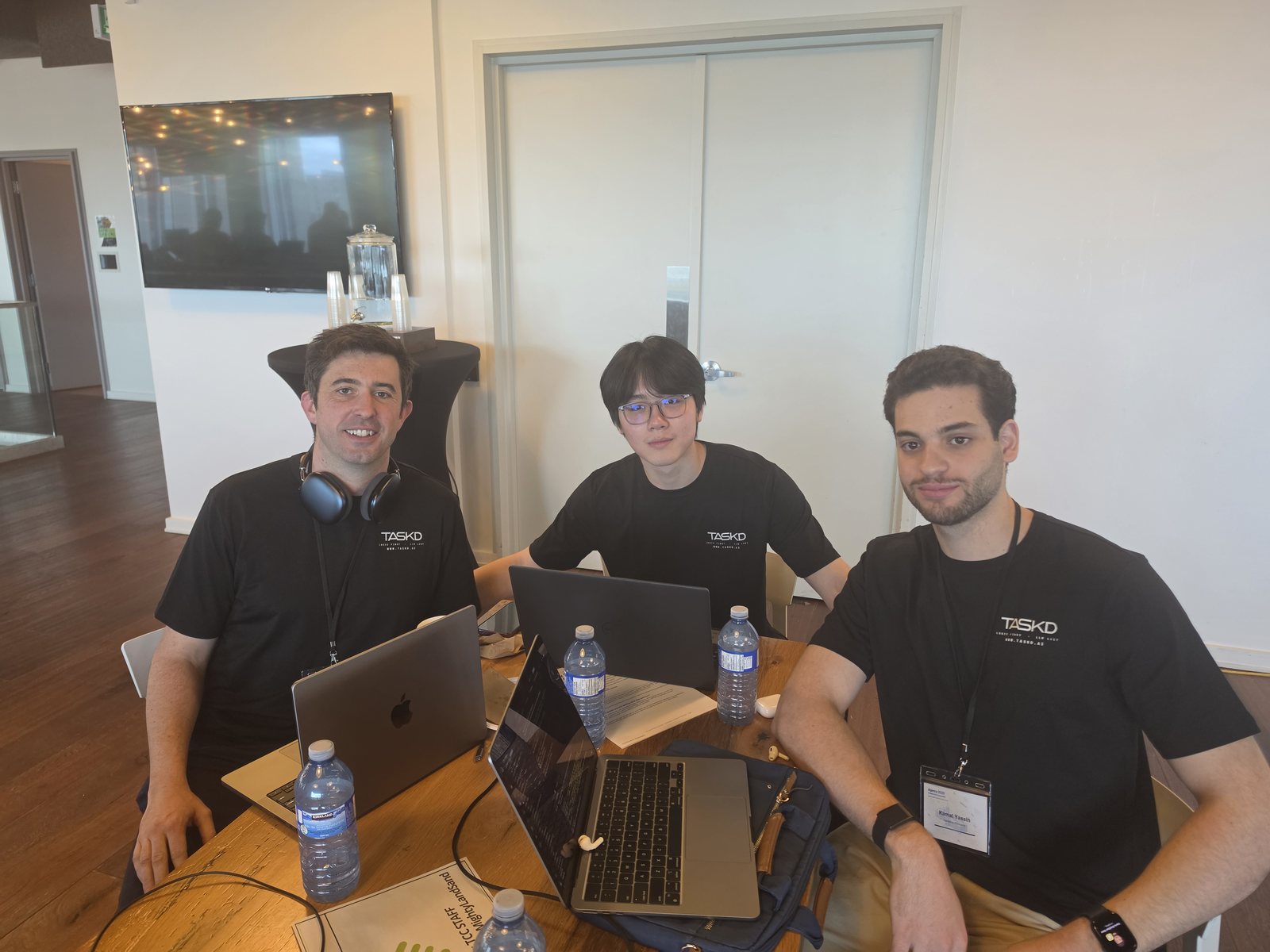
We chose Challenge 6, Related Parties and Governance Networks. The brief asked: who controls the entities that receive public money, and do they also control each other? It is the hardest kind of question for conventional analytics, because the answer is not in any one dataset. It lives in the relationships between charity filings, grant records, provincial contracts, the lobbyist registry and corporate directorships, none of which were designed to be joined.
AI once, then rules
The approach was the one Taskd uses everywhere. A language model was used exactly once, at the start, to read messy records and produce a clean map of every entity and relationship in the data. After that the model left the room. Every answer came from a rules engine walking the graph step by step, so each finding can be re-traced by hand from the flag back to the source filings that triggered it.
Their system used AI once, at the start, to read messy records and produce a clean map of every relationship in the data. After that, every answer came from walking the map step by step, with no AI in the query path. Every finding can be re-traced by hand.
The rules surfaced 1.56 million connections that existed in the data but appeared in no single dataset. Applied across the graph, they flagged $861 million of directed funds across 16 individuals as high-risk related-party funding flows. The single highest-scoring individual held 55 simultaneous directorships, with $782 million passing through the organisations involved. Each flag carried its evidence trail.
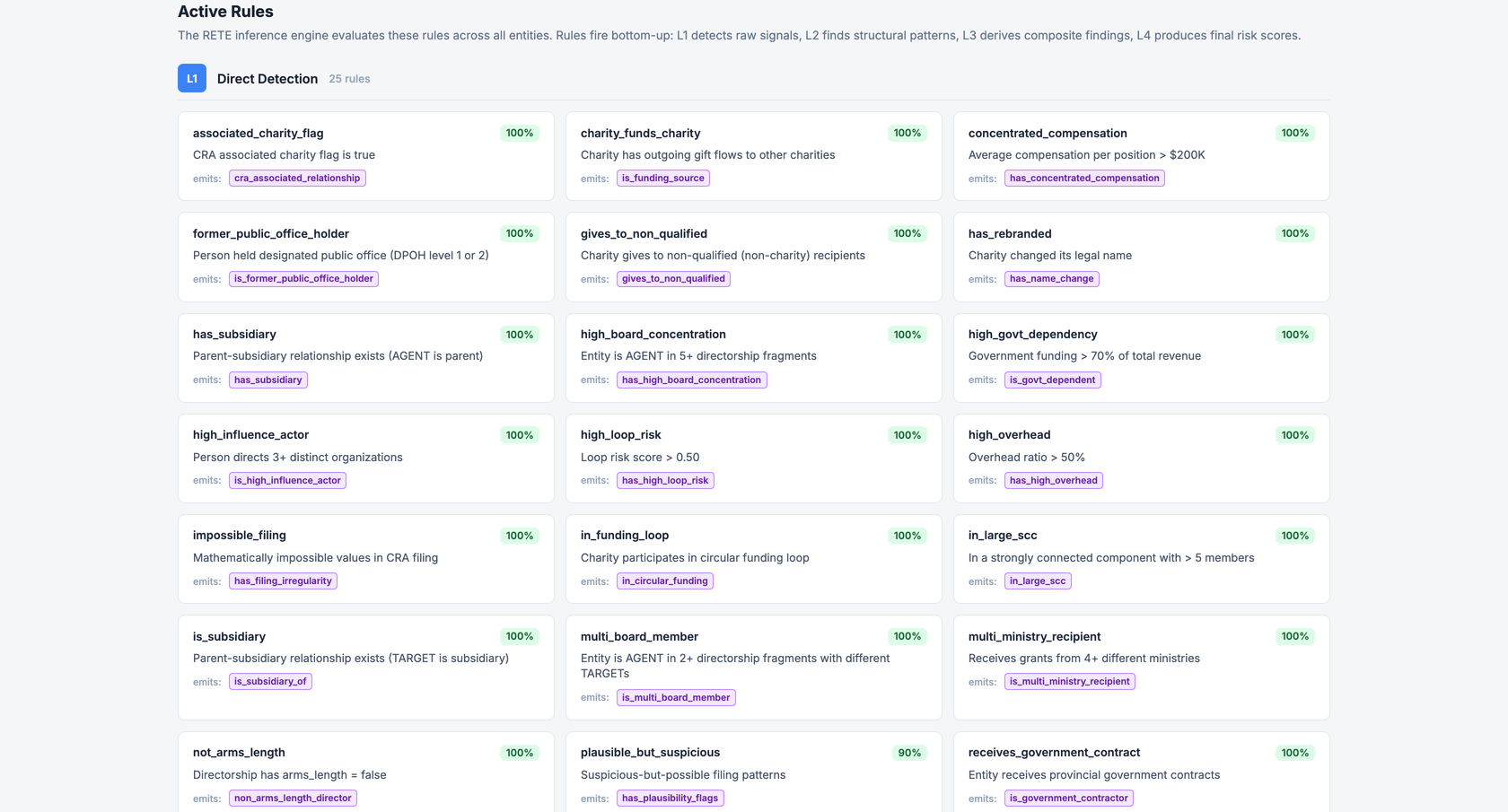
Two boundariesThis was a public-records demonstration, not a customer deployment. The flags it produced were prompts for expert review, not findings of wrongdoing.
Why it matters
The hackathon was a compressed version of the problem every complex operation has. Facts are spread across systems that were never designed to agree. The valuable answers are the ones that connect them. And once the answer has consequences, whether that is public money or a commercial decision, it has to be reproducible. A second-place finish in a national field of more than 1,000 participants, judged on public data anyone can check, is the kind of proof we prefer.
The demonstration remains public at taskd-governance.pages.dev.